
Dalian Travel Guide: Your Complete Guide to China's Most Livable Coastal City
Everything you need to know: Best beaches, Russian Street architecture, seafood market guide, Xinghai Square, scam prevention, and hidden coastal viewpoints
Discover clean beaches, Russian street, seafood markets, and modern squares. In-depth guide for Western visitors.
Why Dalian? Quick Overview
Everything Western visitors need to know before booking
Modern Coastal Paradise
Clean, green city with Russian and Japanese colonial heritage - China's 'Northern Hong Kong'
Xinghai Square, Tiger Beach, and Russian Street
Fresh Seafood & Sea Cucumber
From abalone to sea urchin, Dalian has the freshest seafood in Northeast China
Fine dining, street food, everything available
Mid-Range Budget ($50-140/day)
Moderate prices: 4-star hotels at $70/night, metro rides at $0.40
Deep version guide includes WeChat/Alipay payment setup guide
Beyond Tourist Traps
Deep version guide includes practical anti-scam tips to avoid being cheated
Common local scams, overcharging, and more
🏔️ Planning a Road Trip in Western China?
Get our FREE high-altitude driving safety guide before you go!
High-Altitude Driving Essentials
Get 5 Must-Know Tips for Safe Western China Roads (FREE PDF)
Top 5 Must-Visit Attractions in Dalian
With prices, transport directions, and insider tips to avoid crowds
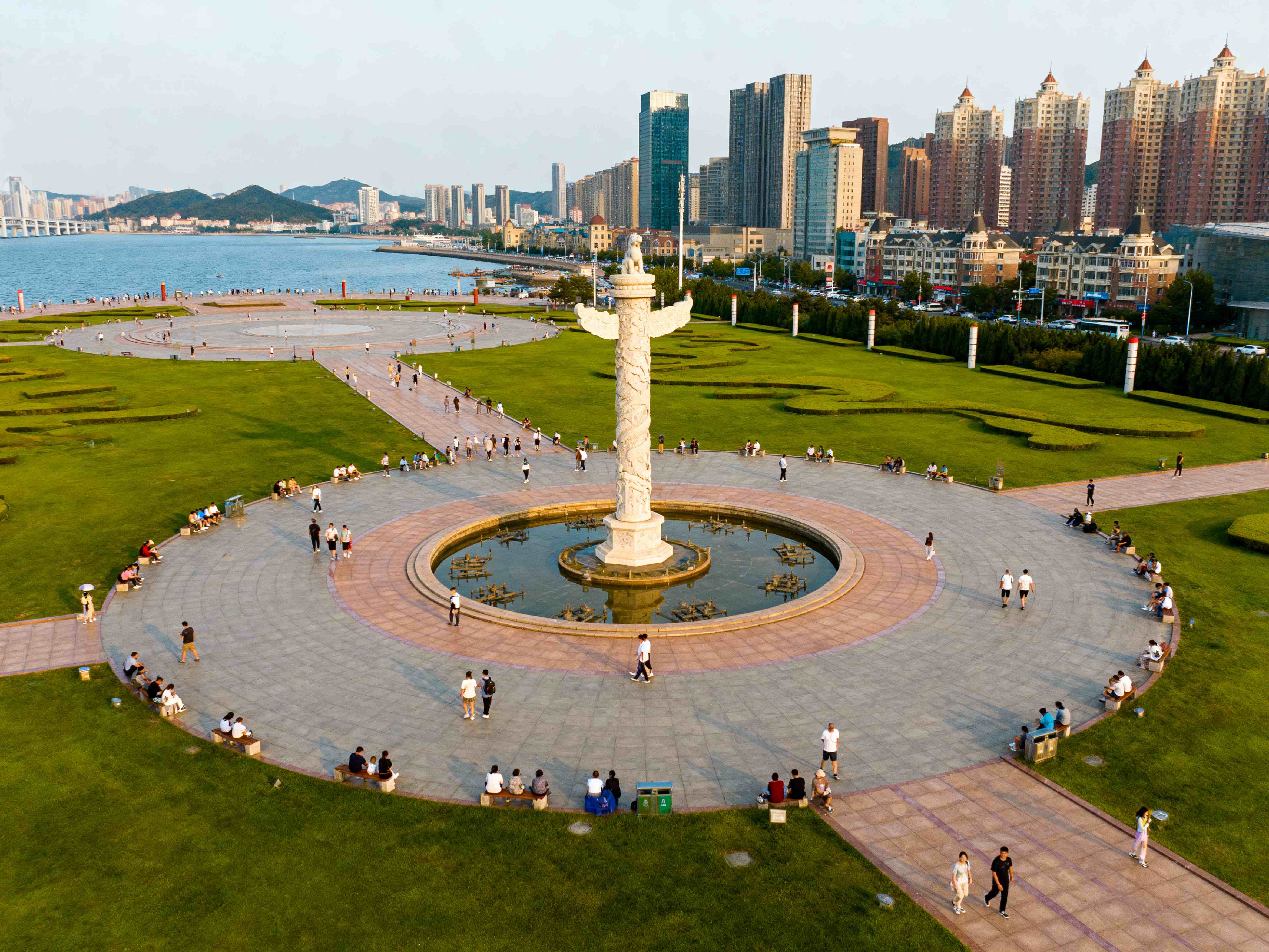
1. Xinghai Square
FreeLargest city square in Asia (1.1 million sqm). Seaside promenade, fountains, and modern sculptures.
🚇 How to get there: Subway Line 1 to Xinghai Square station
💡 Pro tip: Best at sunset. Combine with Xinghai Park beach. Nearby seafood restaurants. Kite flying on weekends.
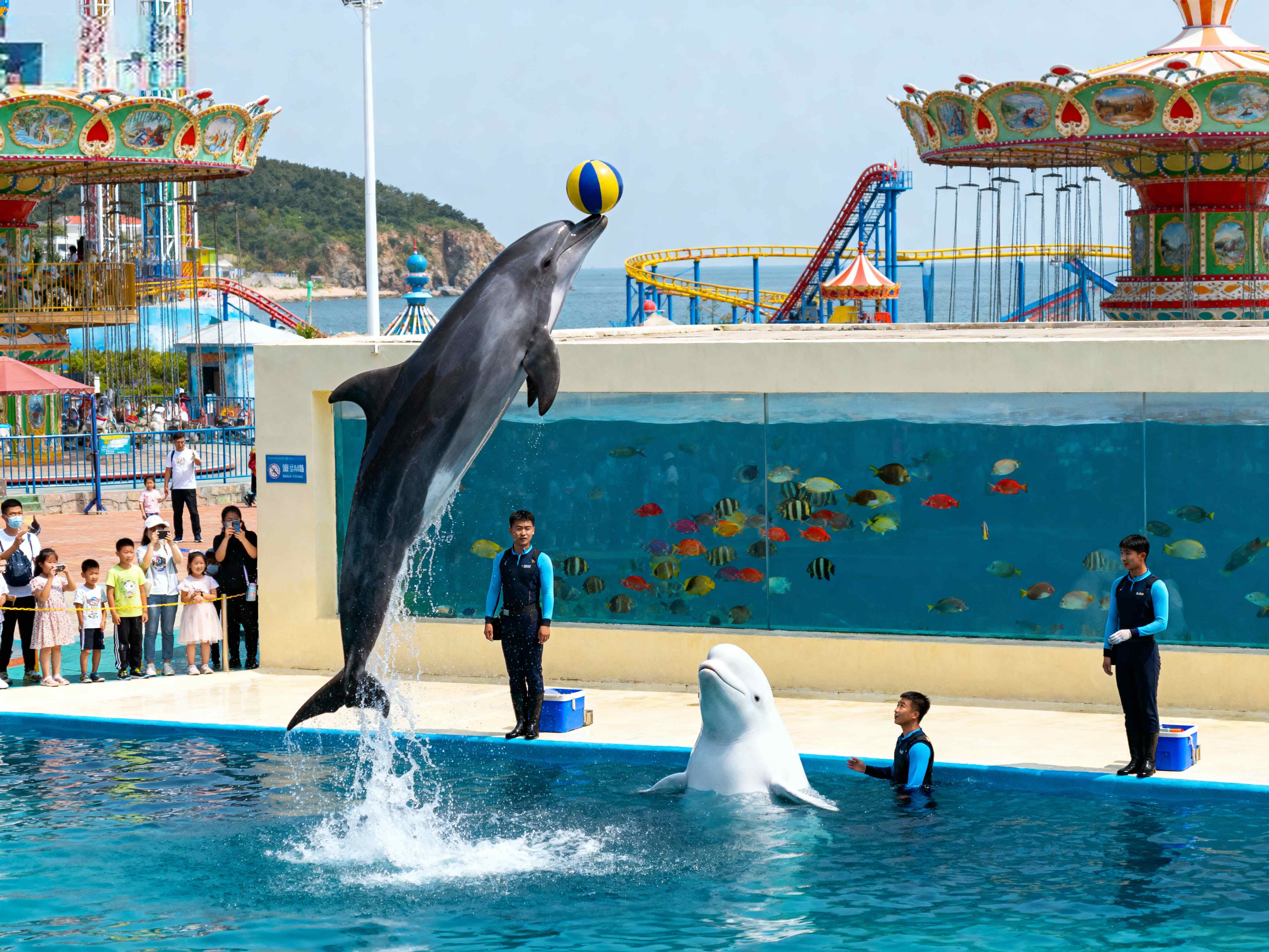
2. Tiger Beach Ocean Park
$35 entranceLarge marine park with polar bears, dolphins, coral reef aquarium, and bird show.
🚇 How to get there: Bus 2/4/30/403 from city center or taxi
💡 Pro tip: Dolphin show at 10am and 2pm. Polar World is highlight. Bring snacks (food inside is expensive). Good for kids.
-1762572454542.jpg)
3. Russian Street (Eluosi Fengqing Jie)
Free (shops/restaurants vary)Restored Russian-style street from early 1900s. Colorful buildings, souvenir shops, and Russian restaurants.
🚇 How to get there: Tram 201 to Shengli Bridge or taxi
💡 Pro tip: Try Russian bread and ice cream. Matryoshka dolls for souvenirs. Best for photos. Combine with nearby Nanshan area.
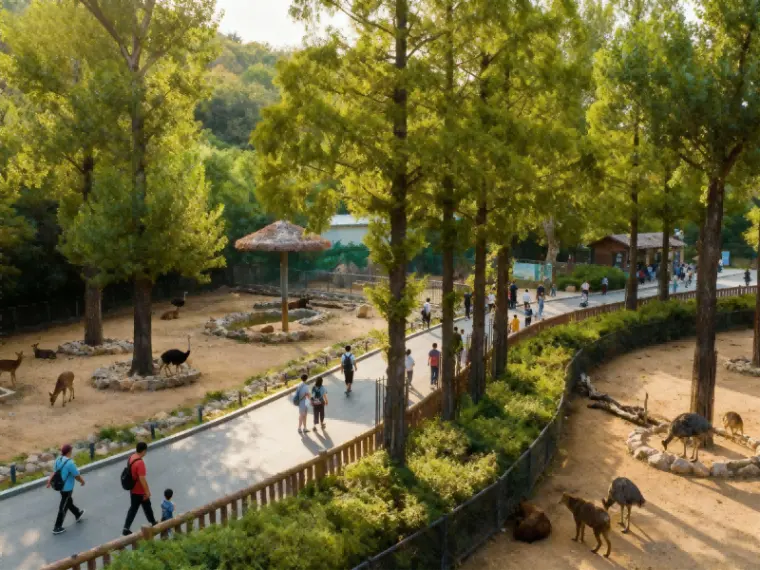
4. Dalian Forest Zoo
$20 entrance + $10 cable carLarge hillside zoo with free-range areas, cable car, and panoramic city views. See pandas, Siberian tigers, elephants in natural habitats.
🚇 How to get there: Bus 5/501/541 to Forest Zoo
💡 Pro tip: Take cable car to top, walk down. Visit panda house first (most active in morning). Bring water and snacks. Wear comfortable shoes. Best in spring or autumn.
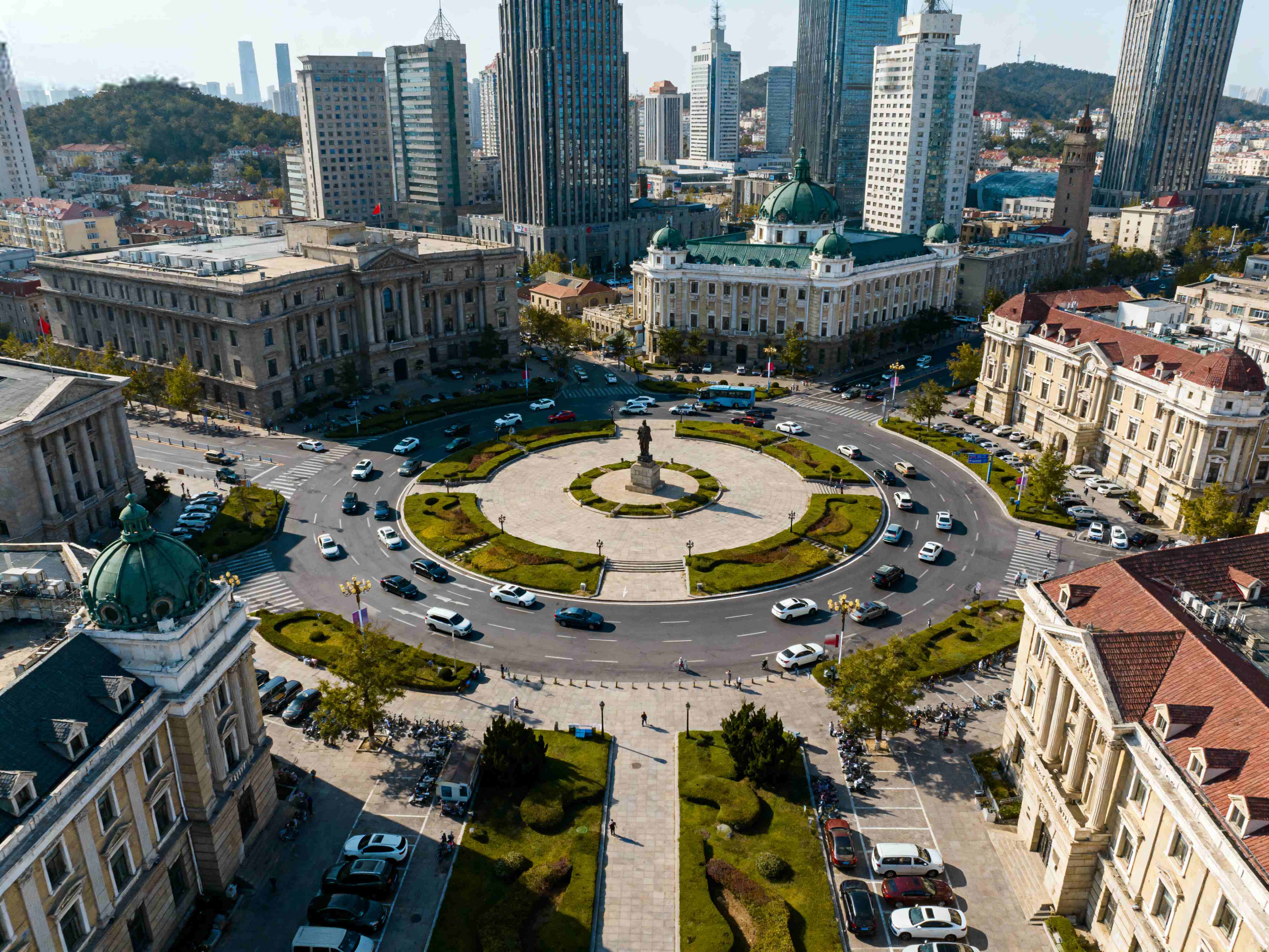
5. Zhongshan Square
FreeHistoric square surrounded by Japanese and Russian colonial buildings. Musical fountain in center.
🚇 How to get there: Subway Line 2 to Zhongshan Square station
💡 Pro tip: Best at night for fountain show. Surrounded by banks and hotels. Walking distance to Dalian Railway Station.
Practical Travel Tips for Dalian
Answers to the most common questions from Western travelers
Is WeChat Pay/Alipay mandatory? Can I use credit cards?
Most restaurants and shops prefer mobile payments, but tourist sites accept cash (CNY) and some take Visa/Mastercard. Our guide includes step-by-step WeChat Pay setup for foreigners (requires Chinese bank account OR use Tour Pass feature for tourists). ATMs are everywhere - Bank of China has best rates.
Is it safe for foreigners to travel alone in Dalian?
Yes! Dalian is one of China's safest and cleanest cities. Main concerns: pickpockets at beaches and markets, overpriced seafood restaurants (check prices before ordering), and taxi drivers taking long routes. The city is very foreigner-friendly. Our deep version guide lists common precautions and anti-scam tips.
Where to stay? Hotels with English-speaking staff?
Zhongshan District (city center) or Shahekou District (near beaches) are best. Recommended: Shangri-La Dalian ($110/night, harbor views), Dalian Jinjiang Inn ($35, budget-friendly), or Airbnb near Xinghai Square ($50). All major chains have English staff.
How to get from airport to city?
Airport bus to city center: $5, 50 minutes, runs 6am-10pm. Subway Line 2 connects airport to downtown (opening 2024). Didi costs $25-35. Dalian has 2 train stations - Dalian Station (city center) and Dalian North Station (high-speed trains).
Can I eat street food safely? Vegetarian options?
Yes! Dalian is famous for seafood - try grilled squid, sea cucumber, and abalone at Heishijiao Seafood Market. Tianjin Street has authentic street food. Everything is fresh! Vegetarian? Buddhist restaurants near Lianhua Mountain serve veggie seafood alternatives. Western cafes in Zhongshan District have veggie options.
Common scams to avoid?
Seafood market scams are most common - vendors may switch fresh seafood for frozen, or charge by weight before cooking (then add heavy sauce). Always confirm total price and watch them weigh it. Also watch for: fake taxi drivers at train station, overpriced 'wild' sea cucumber (farmed is fine and cheaper). Our deep version PDF guide includes detailed descriptions of all common scams and how to avoid them.
My Personal Experience in Dalian
I apologize for not having been to Dalian yet, so I can only gather and share as much detailed information online as possible for you.
If many people are interested, I’ll make a special trip there and later update everyone with my first-hand experience of the city.
So far, I’ve visited nearly 150 cities across China.
If there are other cities you’d like to see or learn more about, feel free to email us through the contact page, and I’ll include them in future updates.
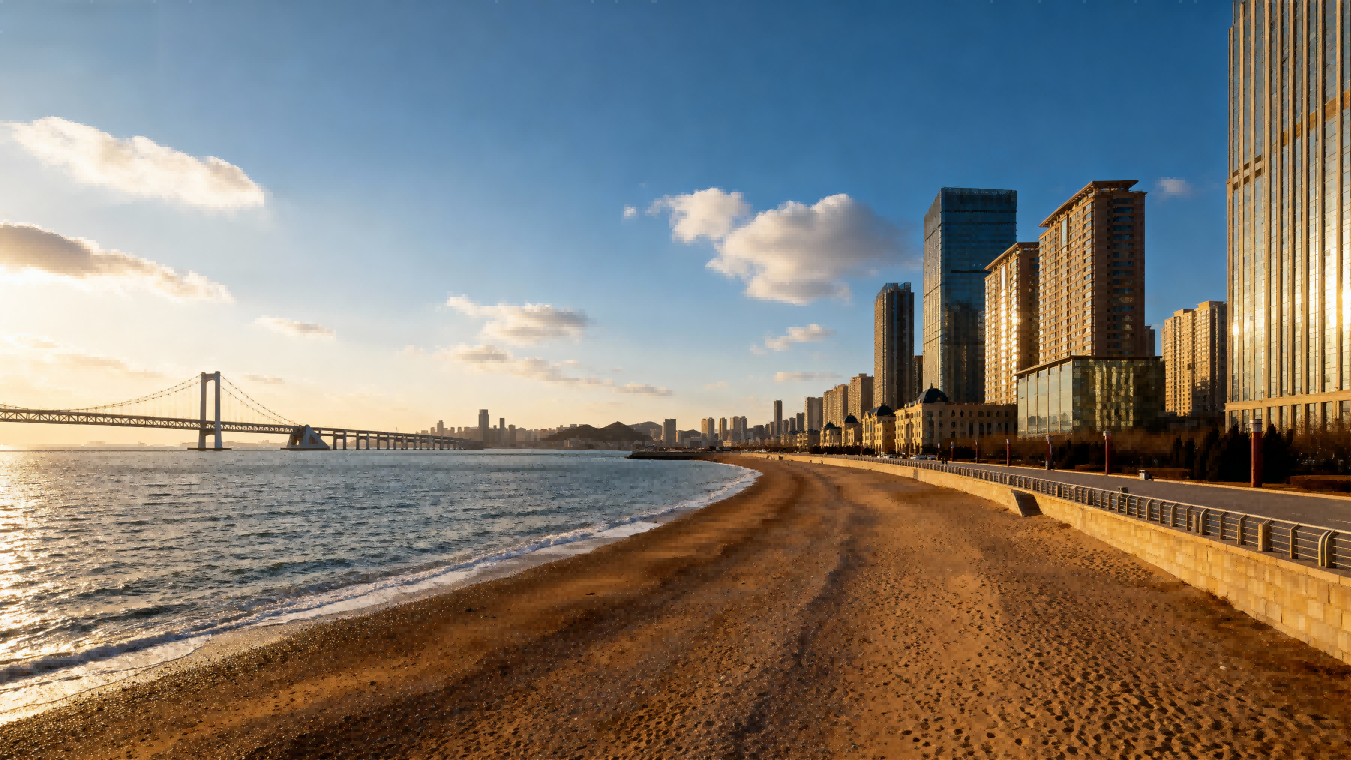
Dalian: The Shining Coastal Pearl
Dalian—also known as Bincheng (“Harbor City”) and Kuncheng (“City of the Kun”)—is a coastal metropolis at the southern tip of the Liaodong Peninsula in China’s Liaoning Province. Once called Qingniwa and later Dalini, this vibrant city serves as the economic, financial, trade, and shipping hub of Northeast China. It is one of China’s five nationally designated “plan-alone” cities and among fifteen sub-provincial municipalities.
Often referred to as the “Hong Kong of the North,” Dalian is celebrated for its seaside scenery, mild climate, and cosmopolitan atmosphere—earning it affectionate titles such as “The City of Romance” and “The Northern Pearl.”
Covering about 13,200 square kilometers (12,000 land and 1,200 sea), Dalian has a registered population of around 6.09 million (7.45 million by the 2020 census). In the first half of 2025, the city’s GDP reached 464.7 billion RMB, up 5.5% year-on-year—ranking first among all cities in Northeast China.
From its prehistoric fishing roots to its colonial past and modern revival, Dalian’s 7,000-year history tells the story of China’s frontier expansion, foreign encounters, and national renewal.
This overview explores Dalian’s transformation through four dimensions: geography and culture, history, economy, and modern development.
1. Geography and Culture: The Romantic City by the Sea
Dalian lies in a temperate coastal zone, surrounded on three sides by water:
The Yellow Sea to the east,
The Bohai Sea to the west,
And across the Bohai Strait to the south, the Shandong Peninsula.
To the north stretch the rolling Liaodong Hills. The city’s coastline extends 1,906 kilometers—including over 1,000 islands such as Guanglu Island and Snake Island.
The terrain rises in the north and slopes southward, with an average elevation of 50 meters. The landscape follows the pattern of “six parts mountains, one part water, three parts farmland.” Dalian enjoys a monsoon-influenced climate with warm summers (23°C), mild winters (-4°C), 600–800 mm of annual rainfall, and about 2,500 hours of sunshine.
Its sea breezes keep the air fresh and temperatures pleasant—making Dalian one of China’s favorite summer retreats.
Cultural Character
A Multicultural Blend
Dalian’s culture merges Russian, Japanese, and European influences with northeastern fishing traditions. The local dialect belongs to the Jiao–Liao Mandarin branch. About 385,000 residents belong to ethnic minorities—mainly Manchu, Korean, and Hui communities.
Intangible Heritage
National-level cultural treasures include Dalian Fishing Lantern Art, Wafangdian Walnut Carving, and Zhuanghe Paper-Cutting. Local delicacies such as Dalian seafood and beer festivals continue traditions dating back to the colonial era.
City Spirit
“Romance, innovation, openness, and inclusiveness” define Dalian’s character. Its pace of life is relaxed, its air quality ranks among the best in China (AQI often below 50), and its residents value a balance between urban life and nature.
European architecture, seaside art, and modern lifestyle coexist here in a uniquely romantic rhythm.
2. Historical Timeline: From Fishing Village to International Port
From Prehistory to the Late Qing (5000 BCE – 1898 CE)
Archaeological discoveries at Xiaozhushan Site date human settlement back 7,000 years, revealing pottery and stone tools from early fishing communities. During the Shang and Zhou periods, the region connected culturally with Shandong’s Longshan civilization.
Through the Qin, Han, Tang, Liao, Ming, and Qing dynasties, Dalian’s role shifted between a fishing outpost, salt-production site, and military frontier—laying the foundation for its later maritime identity.
Modern Era (1898 – 2025)
In 1898, Russia leased Lüshun and Dalian Bay, building the Dalini Naval Base and introducing European urban planning. After Japan’s victory in 1905, Dalian entered its “Dairen” phase—hailed as the “Eastern Paris,” with booming industry and a population surpassing 500,000 by the 1930s.
Liberated by Soviet forces in 1945 and returned to China in 1950, Dalian became a model of socialist industrialization.
Since the Reform and Opening-Up in 1978, it has hosted major milestones: the Economic Development Zone (1984), sub-provincial status (1994), and 2008 Olympic sailing events.
By 2025, Dalian stands as a key Belt and Road hub, its GDP expected to exceed one trillion RMB, powered by high-tech industries, finance, and cultural tourism.
3. Economic Transformation: From Fishing Port to High-Tech Engine
Dalian’s economy mirrors China’s modernization path.
Ancient to Qing (221 BCE–1898 CE): Fishing, salt, and agriculture formed the economic base.
Colonial Era (1898–1945): Massive foreign investment built ports, railways, and industries. By the 1930s, port throughput reached 5 million tons.
PRC to Cultural Revolution (1949–1976): Rapid industrialization boosted cargo and GDP but slowed during political turbulence.
Reform to Present (1978–2025): Economic liberalization turned Dalian into a modern, export-oriented metropolis.
Today, the economy is 60% services, 25% industry, and 15% agriculture and fisheries. The port handles 500 million tons of cargo yearly (7th globally), and the High-Tech Zone exports over $10 billion in software.
Dalian integrates port, industry, and city functions in harmony—achieving growth without sacrificing environmental quality.
4. Modern Development: A Model of Coastal Vitality (1979–2025)
Since the 1980s, Dalian has transformed into a modern, livable coastal city. Its population grew from 4 million (1978) to 7.45 million (2020), with an urbanization rate of 82%. In 2025, its GDP grew over 5% under the “Dual Pioneer Zone” strategy for technology and innovation.
Preservation and Innovation
Architectural landmarks such as Zhongshan Square and the Lüshun Prison Museum are now national heritage sites.
Environmental programs like Xinghai Bay Wetland Restoration keep PM2.5 below 30 µg/m³.
In 2025, Dalian began preparing its UNESCO heritage application.
Tourism Flourishes
Cultural tourism has grown 10% annually since 2017.
By 2023, Dalian welcomed 100 million visitors, generating 100 billion RMB in revenue.
City Highlights include:
Jinshitan National Resort: Geological wonders, known as the “Little Guilin of the North.”
Laohutan Ocean Park: One of the world’s largest marine parks.
Xinghai Square: The world’s largest city square, alive with music and dance.
Lüshun Binhai Geopark: Scenic cliffs and historic war monuments.
Bangchui Island: Pine-shaded beaches and Mao Zedong’s villa.
Dalian Forest Zoo: Home to pandas, tigers, and 100+ species.
Bingyu Valley: Waterfalls and ice caves—the “Jiuzhaigou of the Northeast.”
Dalian Modern Museum: Showcasing local architecture and design.
Baiyushan Forest Park: Famous for cherry blossoms and hiking trails.
Challenges and Outlook
Population aging (16.9% over 65) and industrial upgrading remain key issues.
According to the 2025 China Cultural Tourism Report, Dalian is expanding its “Culture + Technology” strategy—using metaverse-guided tours and smart tourism systems to reach 120 million annual visitors.
Conclusion: The Eternal Charm of Dalian
From the shell mounds of Xiaozhushan 7,000 years ago to the digital skyline of 2025, Dalian remains a luminous pearl between the Bohai and Yellow Seas. It reflects both China’s history and its modern aspirations—where ocean breezes mingle with a rhythm of romance and renewal.
UN experts praise Dalian as a “model gateway city for Northeast Asia.”
Strolling its coastline, one feels both the resilience and romance that define the city.
For travelers:
Best time: Summer (cool breezes and seafood feasts); Winter (quiet seaside beauty and skiing).
Stay: 3–5 days to explore.
Tips: Visit Xinghai Square and Laohutan by day, enjoy seafood and local beer by night.
Comments (0)
Frequently Asked Questions About Dalian
Real questions from travelers planning their trip
Q1: What are the biggest mistakes Western visitors make in Dalian, and how can I avoid them?
Mistake #1: Only visiting Xinghai Square and missing Bangchuidao Beach. #2: Eating at overpriced seafood restaurants in tourist areas (go to Heishijiao Market instead). #3: Not trying sea cucumber and abalone (Dalian specialties). #4: Visiting in winter (too cold, beaches closed). #5: Skipping Russian Street and Zhongshan Square (beautiful architecture). #6: Not taking the coastal tram (scenic route).
Q2: As a foreigner, how long can I stay in China visa-free? Where can I check this information?
Visa-free duration varies by nationality (typically 15-30 days for eligible countries). Check official sources: a) Ministry of Foreign Affairs of the People's Republic of China - Consular Service website, b) National Immigration Administration of China official platform, c) Chinese Embassy/Consulate in your home country. Requirements and eligible countries change frequently, so always verify before booking flights.
Q3: Do I need travel insurance for China, and what should it cover?
Yes, highly recommended! Your insurance should cover: medical emergencies (hospitals may require upfront payment), medical evacuation, trip cancellation/interruption, lost luggage, and personal liability. Ensure it covers adventure activities if you plan hiking (Great Wall) or skiing. Some policies exclude pre-existing conditions. Recommended providers: World Nomads, SafetyWing, or Allianz. Cost: $30-80 for a week. Keep policy documents offline as you may not access cloud storage without VPN.
Q4: Is Didi (China's Uber) safe and easy for foreigners?
Yes! Didi is safe, affordable, and foreigner-friendly. Download the app before arrival and link an international credit card or Alipay/WeChat Pay. The app has English interface. Drivers may not speak English, but the app translates your destination. Safety features: GPS tracking, driver ratings, emergency button. Cost: 50-70% cheaper than taxis. Pro tip: Screenshot your destination in Chinese to show drivers if needed. Avoid unlicensed 'black cabs' at airports.
Q5: Do all hotels accept foreigners, or are some 'Chinese only'?
Not all hotels can accept foreigners - they need a special license to register foreign passports. International chains (Hilton, Marriott, Hyatt) and most 3-star+ hotels in major cities are licensed. Budget hostels and small guesthouses may not be. Always confirm when booking: look for 'accepts foreign guests' or ask directly. Bring your passport - hotels must register you with local police within 24 hours (standard procedure, not concerning).
Latest Travel Tips
Explore More Destinations
Discover other amazing cities in China with our comprehensive travel guides